A Consultant Neurologist Who Has Managed Over 400 Stroke-Warning Survivors Reveals the Daily Vigilance System That Helps Reduce the Risk of a Second Episode — So You Stop Living in Fear of What the Doctor Did Not Explain. Alongside Your Doctor.
He was discharged with "take your medication and rest." But nobody told him what to actually do every single day. What to monitor. What to avoid. What the warning signs of a second episode look like. "Rest" is a word. Not a system. And his body already sent one warning.
The warning.
It came without announcement. A Tuesday afternoon. You were in a meeting. Or in traffic. Or at your desk doing something ordinary that you had done a thousand times before. And then your body sent a signal you had never felt. A sudden weakness on one side. Or a moment where words would not form. Or a numbness that arrived and departed within minutes, leaving nothing behind except the most terrifying question of your life:
"What just happened to me?"
The hospital confirmed it: a Transient Ischemic Attack. A TIA. A mini-stroke. A warning. The doctor used a phrase that has not left your head since: "This is your body telling you that a full stroke is possible. We need to take this seriously."
They took it seriously for 3 days. You were monitored. Scanned. Tested. Medicated. Then discharged. And the discharge instructions were:
"Take your medication. Rest. Reduce stress. Follow up with your doctor in 4 weeks."
Four sentences. For the rest of your life.
"I am 55. I have been a senior executive for 18 years. I have managed teams, budgets, crises, board meetings. I have never been afraid of anything in my professional life. But since the TIA, I am afraid of my own body."
"The doctor said 'rest and reduce stress.' I run a department. How do I rest? He said 'take your medication.' I take it every morning. But nobody told me what else to do. Every single day. Between the medication and the next appointment — what do I DO?"
"I am scared to fly. Scared to sit in Lagos traffic for 2 hours. Scared to exercise because what if it triggers something. Scared to get angry because they said stress is a factor. I am a man who built a career on being unshakeable. Now I flinch at my own heartbeat."
"I have spent N450,000 on the hospital stay, scans, and medications in 3 months. N450,000 on RESPONSE. Zero on a daily system that might help reduce the risk of needing that hospital again. The hospital treated the warning. Nobody is helping me prevent the next one."
If you have had a TIA or stroke warning. If "take your medication and rest" is the entirety of your daily prevention system. If you live in fear of a second episode because nobody told you what daily vigilance actually looks like. If you are an African professional carrying this quietly because admitting fear feels like admitting weakness. Keep reading. Alongside your neurologist.

Dele A.
55. Lagos. Senior executive. Had a TIA 3 months ago. Discharged with 4 sentences. Until Dr. Adeyemi showed him: "rest" is a word. Vigilance is a system.
Blood Pressure
Your daily BP reading. What the numbers mean. Which range is safe post-TIA. When to call your doctor. When to go to the hospital.
Medication Timing
Every medication. Correct time. Correct sequence. What happens if you miss a dose. What to do. Never skip. Never adjust without your doctor.
Hydration
Dehydration thickens blood and increases clot risk. Specific daily water targets. When to drink. Signs of dehydration to watch for.
Stress Response
Not "reduce stress." A specific technique for when stress spikes: meetings, traffic, conflict. The 90-second neurological reset that supports BP stability.
Warning Signs
The FAST protocol and beyond. Every sign that a second episode may be developing. What to do at EACH sign. When to go to hospital IMMEDIATELY.
Know These Signs — Act Immediately
If ANY of these signs appear: CALL EMERGENCY SERVICES. DO NOT WAIT. DO NOT DRIVE YOURSELF. CALL NOW.
"Take Your Medication and Rest"
Correct. Essential. But it is 2 instructions covering 24 hours. What about the other 22 hours? The medication manages the chemistry. Nobody manages the daily behaviour that supports the chemistry.
"Reduce Stress"
You run a department. You sit in Lagos traffic. You have a family, a mortgage, responsibilities. "Reduce stress" without a technique is like "lose weight" without a diet. A sentence, not a system.
Avoiding Everything
No flying. No exercise. No argument. No traffic. The avoidance strategy. Living in a bubble of fear. The TIA took 10 minutes. The fear has taken 3 months. And avoidance is not prevention. It is imprisonment.
Quarterly Doctor Visits Alone
Essential. But 90 days between visits. Who manages the daily vigilance in those 90 days? The patient. With what system? "Take your medication and rest." That is it.
Google: "How to Prevent a Second Stroke"
Contradictory advice. Alarming statistics. Generic articles not specific to your situation, your medication, your risk factors. Information without structure is anxiety, not help.
Pretending It Did Not Happen
Going back to the same routine. Same diet. Same stress. Same schedule. Hoping the warning was a one-time event. It was not a one-time event. It was a signal. Ignoring the signal does not silence it.
A post-TIA support session. Lagos. Dr. Bayo Adeyemi. 58. Consultant neurologist. 22 years specialising in stroke prevention and post-TIA management. He had managed over 400 TIA survivors. He knew which ones had second episodes and which ones did not. The difference was not luck.
The Blood Pressure Protocol
How to measure correctly (time of day, arm position, cuff placement). What your post-TIA target range is (your neurologist sets this — the guide teaches you how to read it). What a spike means. What a sustained elevation means. When to call your doctor. When to go to the hospital. The morning and evening readings that become your daily vital sign. Alongside your neurologist.
The Medication Management System
Every medication on time. Every dose correct. What each medication does (blood thinners, statins, antihypertensives — explained in plain language). What happens if you miss a dose. What to do if you miss one. Why you must NEVER stop or adjust any medication without your doctor's approval. The daily medication schedule that turns compliance into routine. Alongside your neurologist.
The Daily Lifestyle Protocol
Hydration: specific daily water targets (dehydration increases clot risk). Nutrition: which foods support cardiovascular health post-TIA (reducing sodium, increasing potassium, omega-3 sources from your local market). Movement: safe exercise guidelines post-TIA (walking programme, what to avoid, when to stop). Sleep: why 7-8 hours is a cardiovascular tool, not a luxury. Your daily lifestyle as a prevention system. Alongside your neurologist.
The Stress Response Technique
Not "reduce stress." A specific 90-second technique for the moments when stress spikes: the board meeting, the traffic jam, the family argument, the work deadline. The neurological reset that supports blood pressure stability during acute stress. Used by Dr. Adeyemi's patients for 15 years. Simple. Invisible. Can be done in a meeting without anyone noticing. Alongside your neurologist.
The Warning Signs Protocol
FAST and beyond. Every warning sign that a second episode may be developing: sudden numbness, vision changes, severe headache, confusion, balance loss. What to do at EACH sign. Which signs mean "call your doctor within hours" and which mean "call emergency services NOW." The protocol your family needs to know too. Printed. On the fridge. In the wallet. On the phone. Alongside your neurologist.
The first week was mechanical. Blood pressure reading: morning, evening. Medication: alarm at 7am and 9pm. Water: 2.5 litres measured. The 90-second stress technique: used in Monday's board meeting when the CFO challenged my budget. Nobody noticed. My blood pressure stayed stable. The system was running.
"By Week 3, something shifted inside me. The fear was still there — the fear never fully leaves after a TIA. But the fear had a structure now. When I felt anxious, I checked my blood pressure. It was in range. I confirmed my medication was taken. I checked my hydration. The anxiety met data. And data is more powerful than fear."
"By Month 2, I flew to Abuja for a meeting. First flight since the TIA. I was terrified. But I had the protocol: hydration before and during the flight. Compression stockings. Movement every 30 minutes. Stress technique during turbulence. I landed. I was fine. Not because the risk disappeared. Because the risk was managed. With a system. Every step of the way."
"The man who sat in that hospital bed 3 months ago, terrified of his own heartbeat, would not recognise the man I am now. Not because the TIA did not happen. It happened. It was real. The risk is real. But the man who was discharged with 4 sentences now has a 5-pillar daily system. The fear is managed. The body is monitored. The lifestyle supports the medication. And the medication supports the life. Alongside my neurologist."
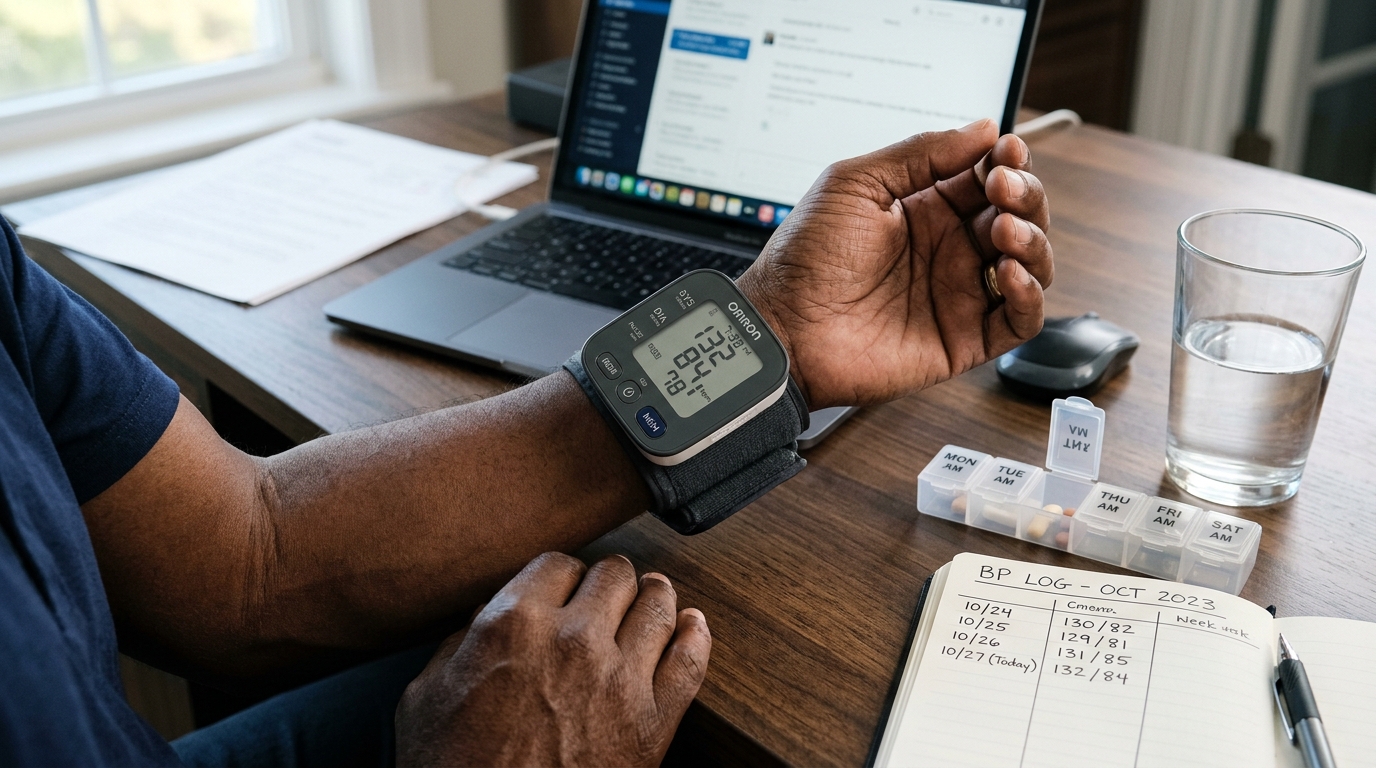
"The Blood Pressure Protocol on Page 5 gave me my confidence back. I now know what my numbers mean. When I see 128/82, I know that is within my post-TIA range. When I see 145/92, I know to contact my neurologist. The numbers are no longer frightening because I understand them. Data replaces fear."
"The 90-Second Stress Technique is the single most useful thing anyone has given me since the TIA. I used it in a board meeting when the tension was rising. Nobody noticed. My blood pressure stayed stable. I have used it every day since. In traffic. In meetings. At home. Invisible. Effective."
"I am in London. Nigerian. The NHS discharged me with exactly what Dele described: 'take your medication.' This guide filled the gap the NHS left. My GP saw my blood pressure log and said: 'This is exactly the kind of daily monitoring we wish all our stroke-warning patients did.' The doctor validated the system."
"My wife read the Warning Signs Protocol and printed it. It is on the fridge. She knows what to look for. I know what to look for. If it happens again, we are not panicking. We are following the protocol. That peace of mind — for both of us — is worth more than any amount."
"The Medication Management section helped me understand WHY I take each drug. I did not know what the statin was for. I did not know the blood thinner's timing mattered. Understanding the 'why' made compliance automatic. I have not missed a dose in 8 weeks."
"I was avoiding exercise entirely. Terrified it would trigger another episode. The safe movement section taught me: walking is not a risk. Sedentary living IS. I now walk 30 minutes daily. My neurologist confirmed it is helping. Movement went from fear to medicine."
Because no man should be discharged from a hospital after a TIA with 4 sentences and left to figure out daily vigilance alone. Because "take your medication and rest" is correct but catastrophically incomplete. Because the 90 days between neurologist appointments are not empty — they are the days when daily behaviour either supports the medication or undermines it. And because the fear that follows a TIA — the fear of flying, of traffic, of stress, of your own heartbeat — is not irrational. It is rational. The risk is real. But fear without a system is paralysis. Fear with a system is vigilance. And vigilance is how you live fully while managing the risk. Alongside your neurologist.
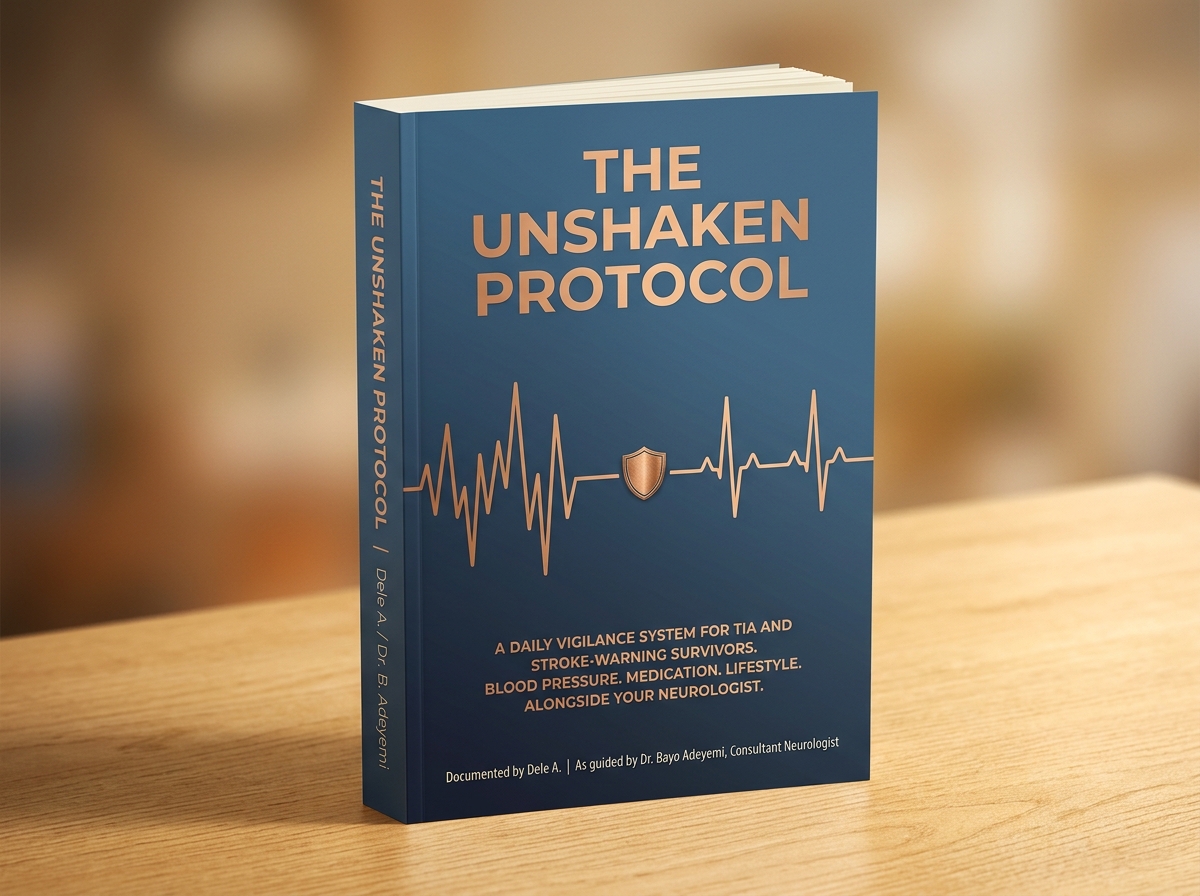
The Unshaken Protocol
A daily vigilance system for TIA and stroke-warning survivors. Blood pressure. Medication. Lifestyle. Stress. Warning signs. Alongside your neurologist.
The Blood Pressure Protocol
How to measure correctly. What your post-TIA range is. What spikes and sustained elevations mean. When to call. When to go.
The Medication Management System
Every medication explained. Timing. Sequencing. What to do if you miss a dose. Why you must never adjust without your doctor.
The Daily Lifestyle Protocol
Hydration targets. Heart-supportive nutrition from your local market. Safe post-TIA exercise. Sleep as cardiovascular medicine.
The 90-Second Stress Technique
The invisible stress response for meetings, traffic, conflict. Used by 400+ survivors. Supports BP stability during acute stress.
The Warning Signs Protocol
FAST and beyond. Every sign. Every action. The protocol your family needs to know. Printed. On the fridge. In the wallet.
Instant download. Both bonuses included. 21-day guarantee.
The Daily Vigilance Tracker
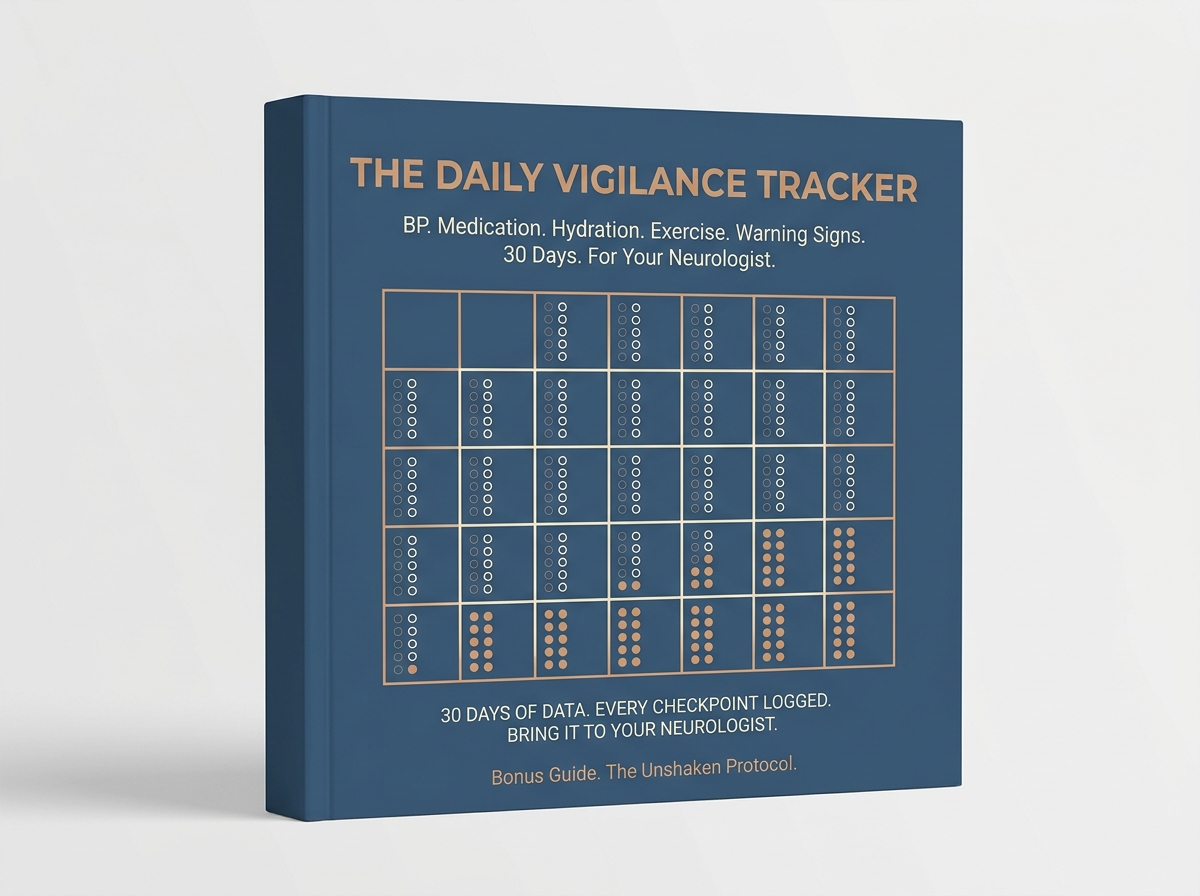
30-day log: BP readings, medication timing, hydration, exercise, warning signs. Data for your neurologist. Bring it to every appointment. The daily system documented.
The Warning Signs Wallet Card
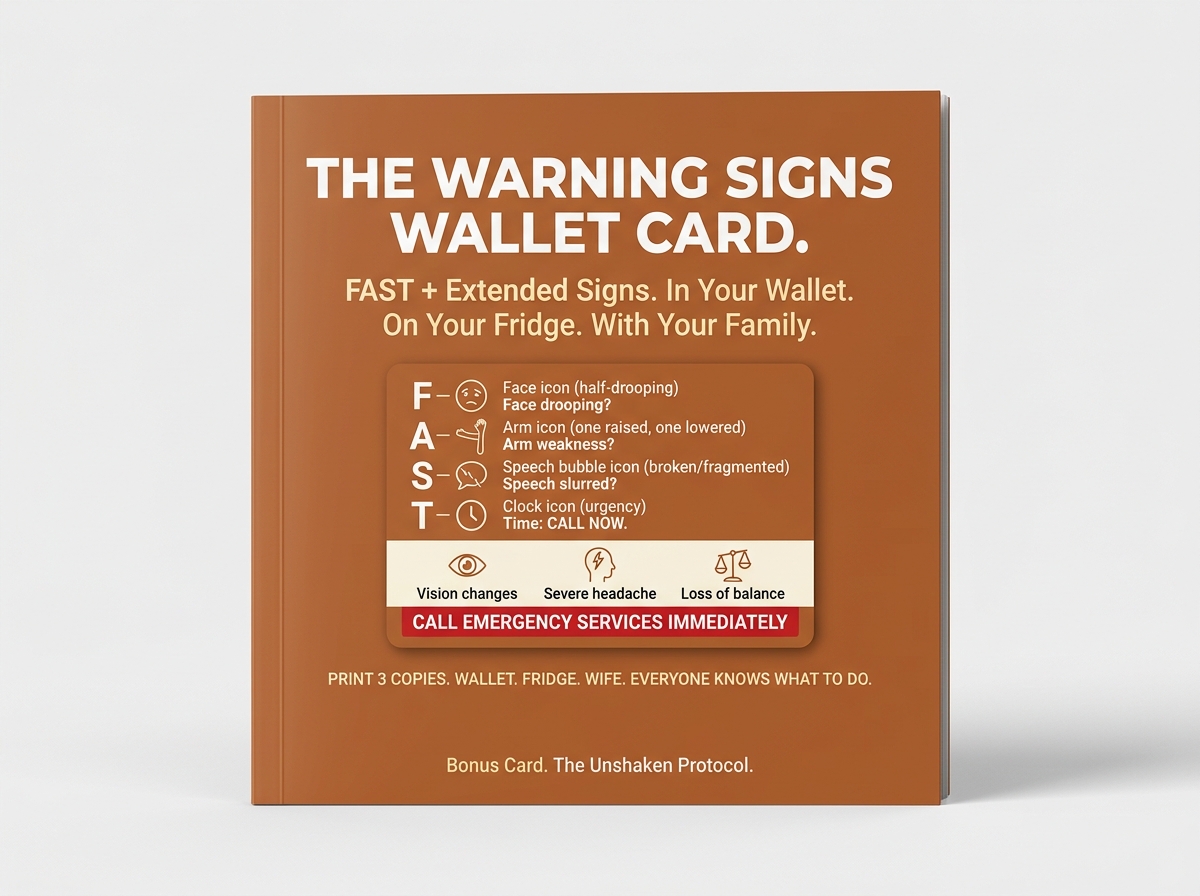
One card. FAST protocol plus extended signs. Fits in your wallet. Give a copy to your wife, your driver, your PA. Everyone around you knows what to do.
21-Day Conditional Guarantee
Follow the protocol for 21 days alongside your neurologist. If it does not give you a clear, structured daily vigilance system, full refund. Keep both bonuses. This guarantee does NOT promise the prevention of stroke or any medical event. It promises a daily system that supports your medical care.
A daily vigilance system or your money back. Alongside your neurologist.
Another Month of Fear Without a System
Another month of "take your medication and rest" with no daily structure. Another month of fear every time your head hurts. Another month of avoiding flights, exercise, and stress without knowing what actually matters.
The warning already happened. The next 90 days are either managed with vigilance or left to chance. "Rest" is not vigilance.
The Warning Gets a System. Today.
Today: Blood pressure protocol active. Medication system structured. This week: Hydration targets set. Stress technique learned. Warning signs printed. By Day 21: Every day is monitored. Every vital sign is tracked. Every medication is on time. The fear is managed by data. The data goes to your neurologist.
N9,800. Less than one follow-up consultation. The daily system that fills the 90-day gap between appointments. Alongside your neurologist.
P.S. #1: What is your blood pressure right now? If you do not know, the Blood Pressure Protocol is the first section to open. N9,800 for the daily readings that turn fear into data. Alongside your neurologist.
P.S. #2: The Warning Signs Wallet Card (Bonus #2) is not just for you. Print 3 copies. Give one to your wife. One to your driver or PA. One in your wallet. If a second episode begins, the people around you need to know what to do in the first 60 seconds. The card tells them. FAST plus extended signs. Action steps. Emergency numbers.
P.S. #3: Dr. Adeyemi: "The TIA survivors who monitor daily present to the hospital less frequently for second episodes. Not because the disease is different. Because the daily behaviour is different. The warning was the opportunity. The system is the response. Build the system. Support the medication. Live fully. Vigilantly. Alongside your neurologist." N9,800. The daily vigilance system. Alongside your neurologist.